OUTDOOR EVENTS / FIELD NOTES
Before an outdoor stage goes on the site plan
A clear patch of grass is not yet a stage location. Ground, weather exposure, audience routes and delivery access all affect whether the setup can work.
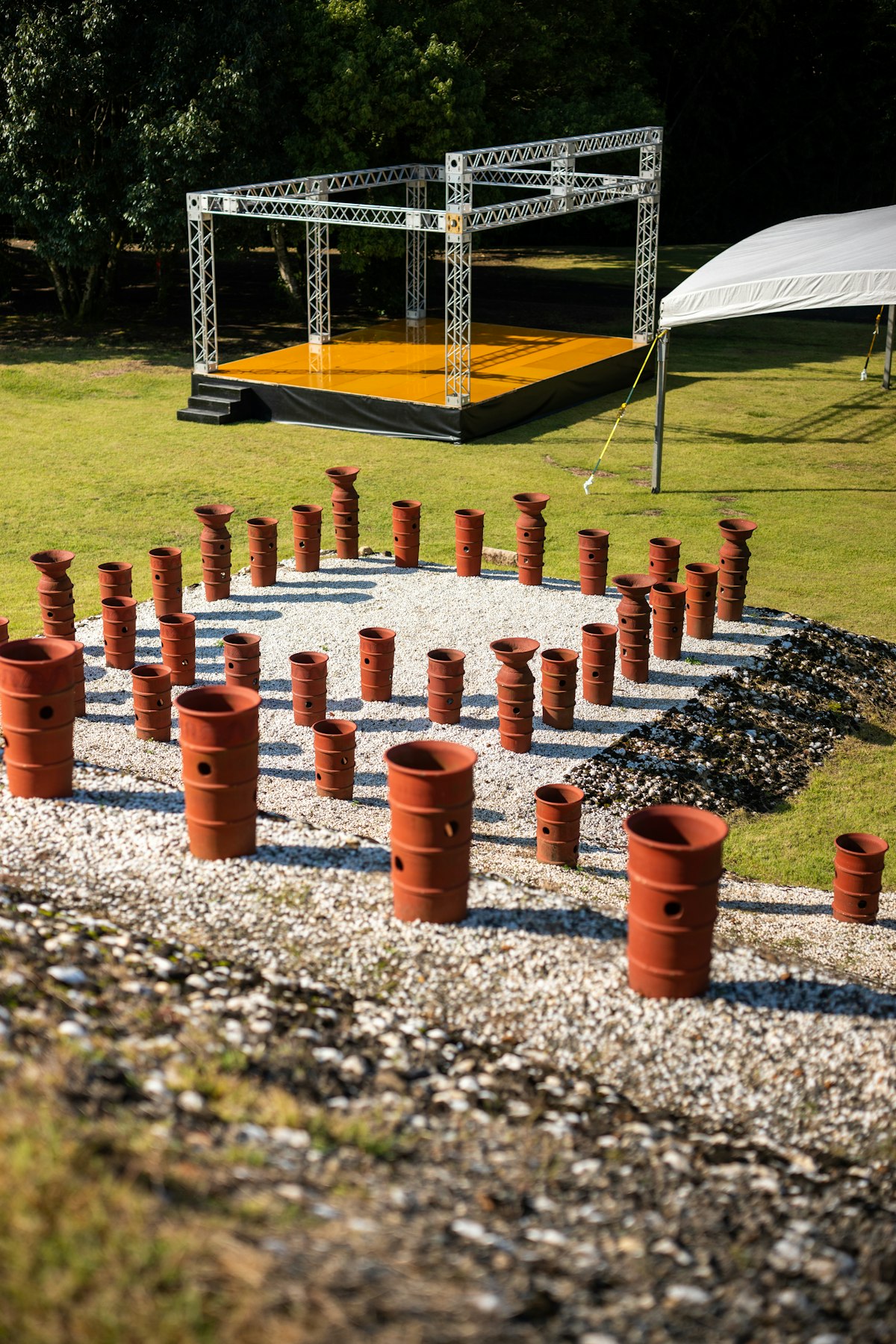
Before asking for a firm outdoor stage quote, identify the exact placement, ground surface, loading route, power plan, weather decision-maker and local approvals. Share unknowns early so they can be checked, not hidden in the quote.
Walk the ground, not just the map
Photograph the proposed area from several sides. Is it grass, gravel, asphalt or a built surface? Is it level after rain? Are there slopes, drains, irrigation heads, underground services or nearby roots? These are questions for the site owner and staging supplier, not details to settle from a satellite view.
Also mark where the audience will stand and how people will approach the stage. A workable equipment footprint can still leave a poor or obstructed viewing area.
Check these details
- Surface and drainage
- Space for the platform, stairs or ramp and any separate support structures
- Audience sightlines and accessible routes
- Vehicle route to the placement area
Name the weather decision-maker
An outdoor plan needs someone responsible for monitoring conditions and deciding when work or the event stops. Agree on the communication chain before load-in. Do not rely on a last-minute conversation between separate vendors.
Lightning is a clear example: the Canadian Centre for Occupational Health and Safety advises taking shelter when thunder is heard or an Environment and Climate Change Canada storm warning is issued. Wind and rain also affect staging, drapes, lighting and access routes, but the appropriate limits depend on the actual equipment and site. Obtain those limits from the responsible supplier.
This checklist is planning guidance, not an engineering sign-off or a substitute for a site-specific safety plan.
Trace the route from truck to stage
Record gate widths, ground conditions, vehicle restrictions, unloading times and the distance from the drop-off point to the stage. If a vehicle cannot reach the placement area, the handling plan changes. If several suppliers share the same route, their load-in order matters too.
Locate power, but do not assume a nearby outlet is suitable for lighting or audio. Ask the production team what circuits and cable routes it needs. Keep cables and equipment out of audience and accessible paths, or plan suitable protection and routing with the venue.
Plan the load-in sequenceCheck who can approve the event site
A park booking, a venue agreement and approval for a temporary stage may be different decisions. The requirements change by municipality, property and event type. Ask the site owner and the relevant local authority what drawings, inspections or permissions are needed before you treat the layout as final.
Send the supplier the event address, date, stage location, proposed size and site photos. Ask which assumptions appear in its quote and which approvals remain the organizer’s responsibility.
Find local planning guidesSources and further reading
These references support the planning points above. Site-specific requirements still need checking with the venue and relevant authority.